Binglin (Kevin) Ji

binglin.j@wustl.edu
STL, MO 63105
I’m Binglin (Kevin) Ji, a recent master’s student in Electrical Engineering and Computer Engineering from Washington University in St. Louis. I work on probabilistic AI, particularly principled and efficient probabilistic inference methods in high-dimensional space. I was advised by Roger Chamberlain on AI inference and collaborated with Yevgeniy Vorobeychik on generative AI and sampling. Before coming to WashU, I worked at National Laboratory of Pattern Recognition, Institute of Automation, Chinese Academy of Sciences (Beijing) and Lenovo Research.
Research Interests
My goal is to design probabilistic models and sampling algorithms that are mathematically principled yet computationally efficient for high-dimensional inference. I’m always excited to collaborate, including but not limited to areas such as AI for Science, Scientific Computing and Variational Inference. My research interests lie in:
🌟 Probabilistic Inference
Sampling and variational inference for high-dimensional SDEs/ODEs provide a principled framework for solving Measure Transport problems. My previous research leverages some of these techniques on probabilistic generative models (Diffusion/Flow/Consistency Models), including: Sampling, Optimal Control over Drift, Tree Search Scheme, and Applied Stochastic Processes.
Generative Modeling for Decision Making
Probabilistic generative models hold great potential for better modeling and solving sequential decision-making problems in many scientific and engineering fields. My previous research leverages these models for this purpose, including: Diffusion Models for Active Discovery/Sequential Decision Making and Expectation-Maximization via Doob’s \(h\)-transform for white-box decision making.
Parallel AI Inference
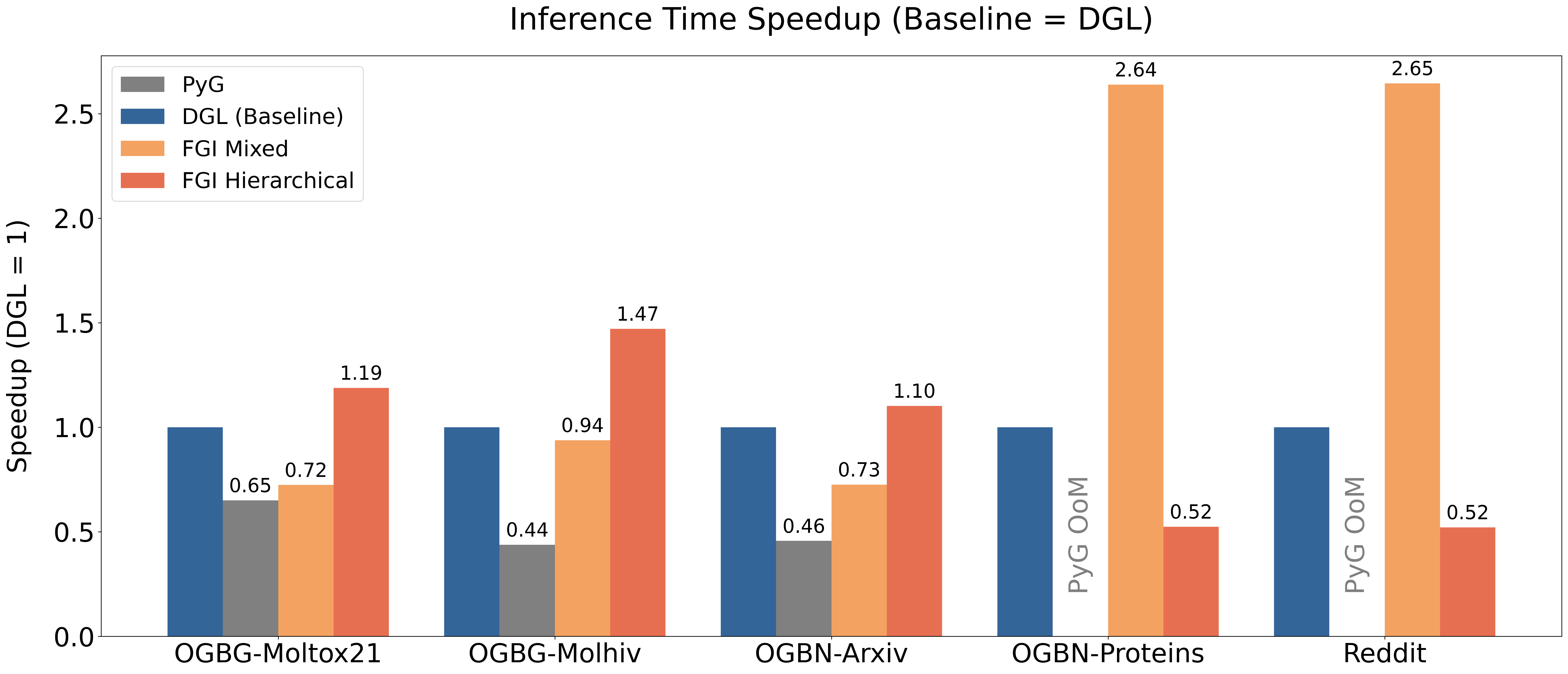
For complex, high-dimensional data representations (e.g., graph-structured data), computation itself poses serious challenges in terms of performance and scalability. My previous research addresses this through high-performance/parallel computing techniques, including: Graph Processing and parallelizing Matrix Computation.
news
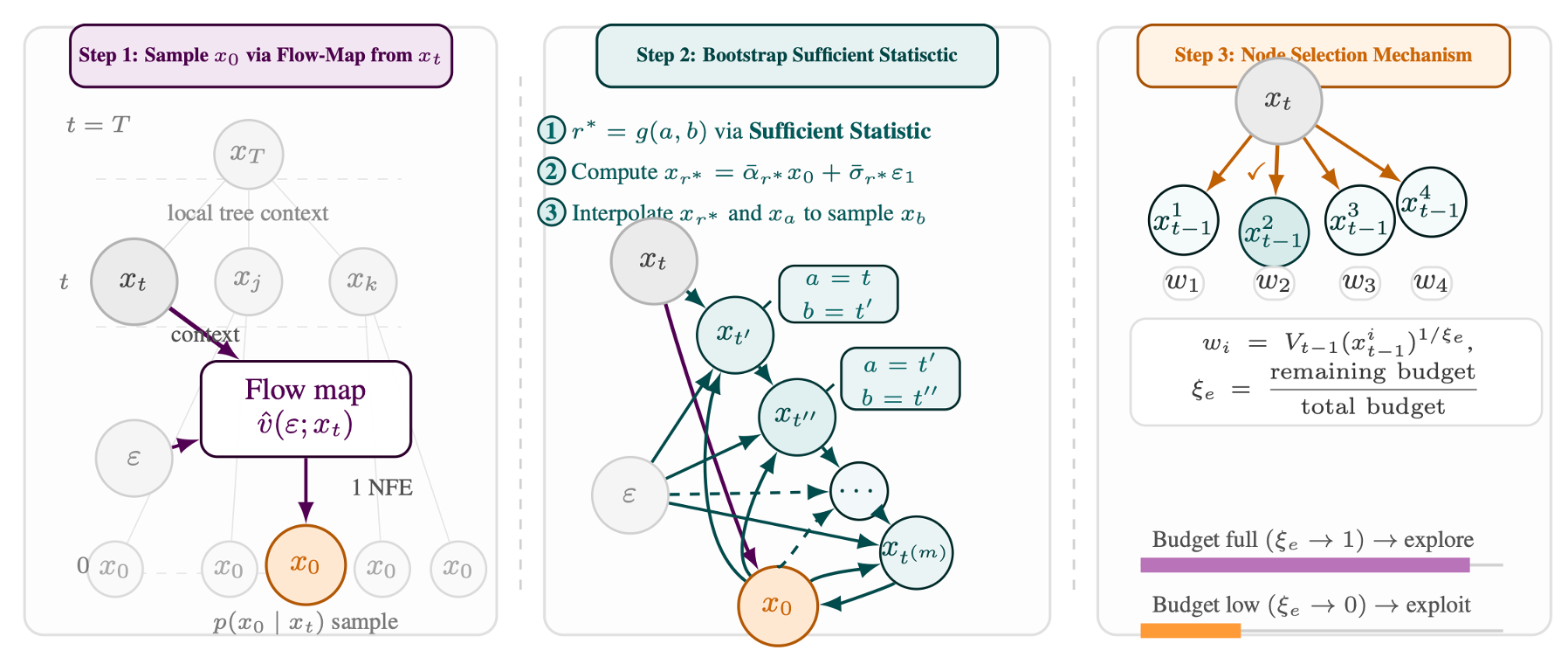
| Jul 03, 2026 | Excited to share that our paper Bootstrap Flow-Map Tree Sampling Enables Online Feedback Driven Search is now available on arXiv ✨ |
|---|---|
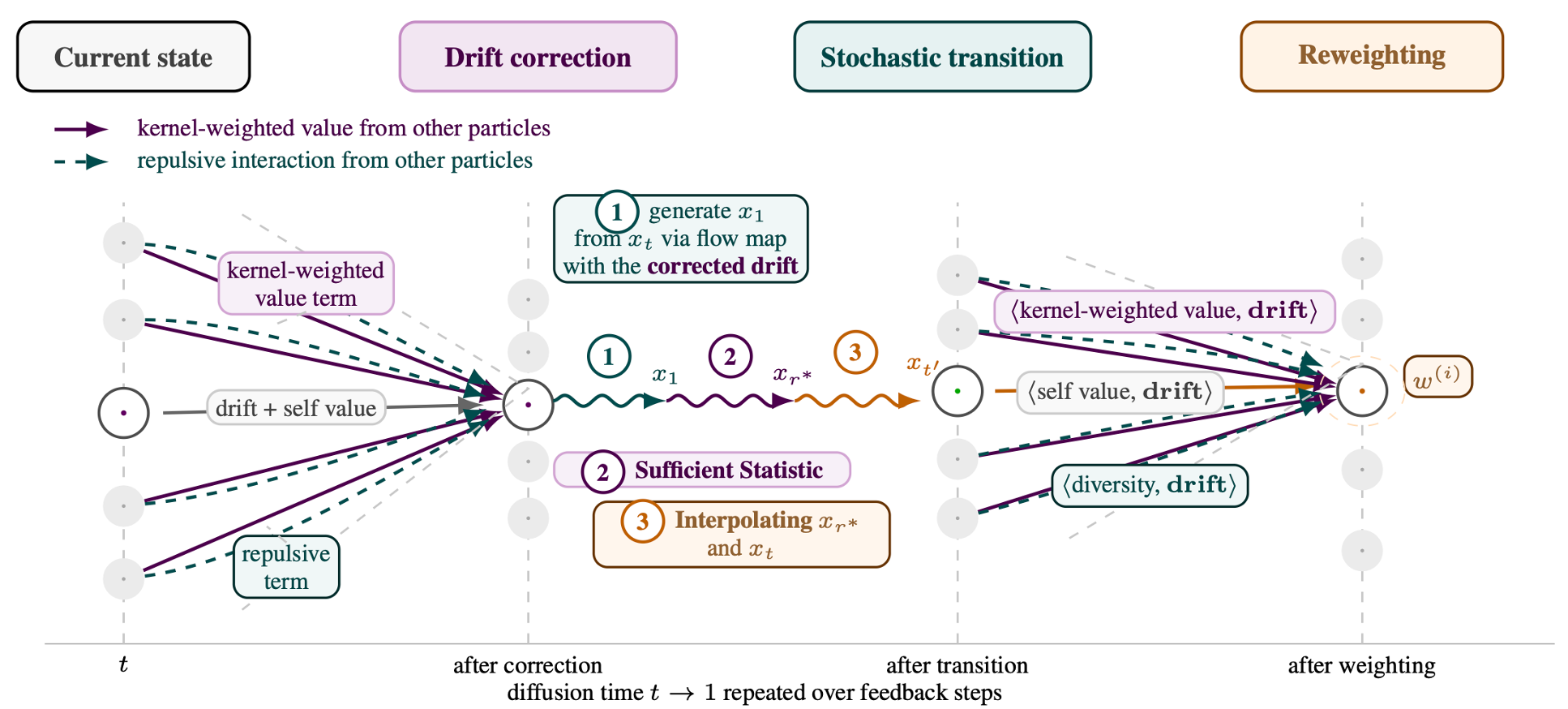
| Jul 01, 2026 | Excited to share that our paper Sequentially-Controlled Interactive Multi-Particle Flow-Maps for Online Feedback-Driven Search is now available on arXiv ✨ |
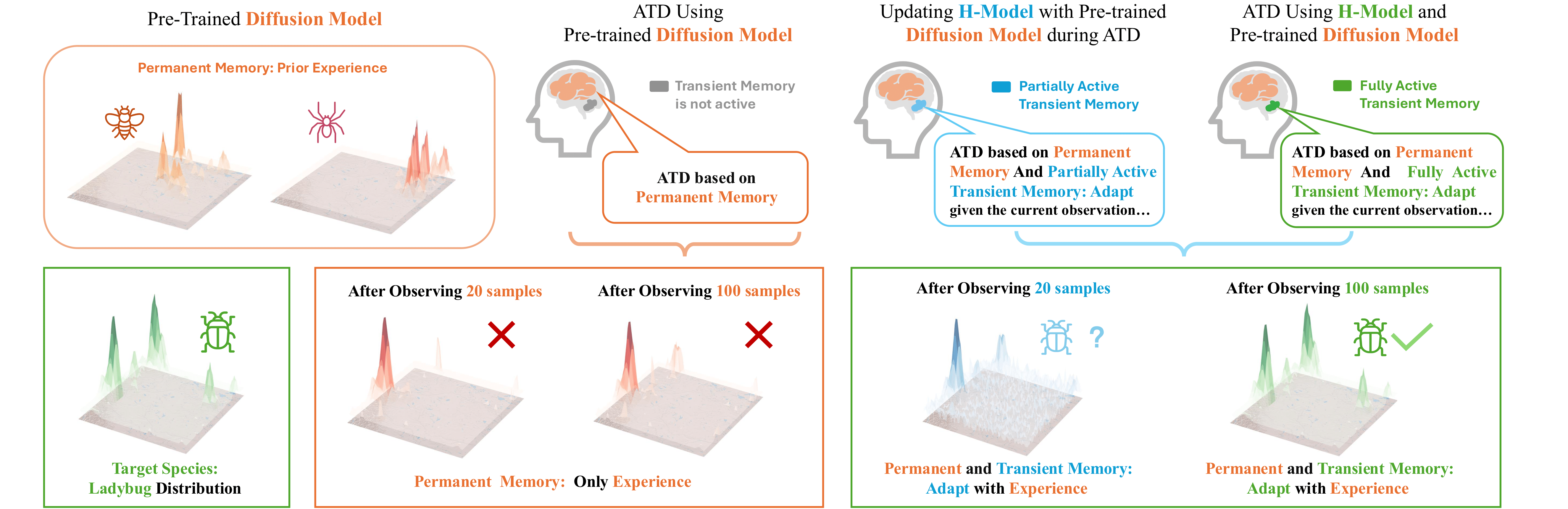
| Sep 18, 2025 | Our paper Active Target Discovery under Uninformative Prior: The Power of Permanent and Transient Memory is accepted by NeurIPS 2025 🚀 |
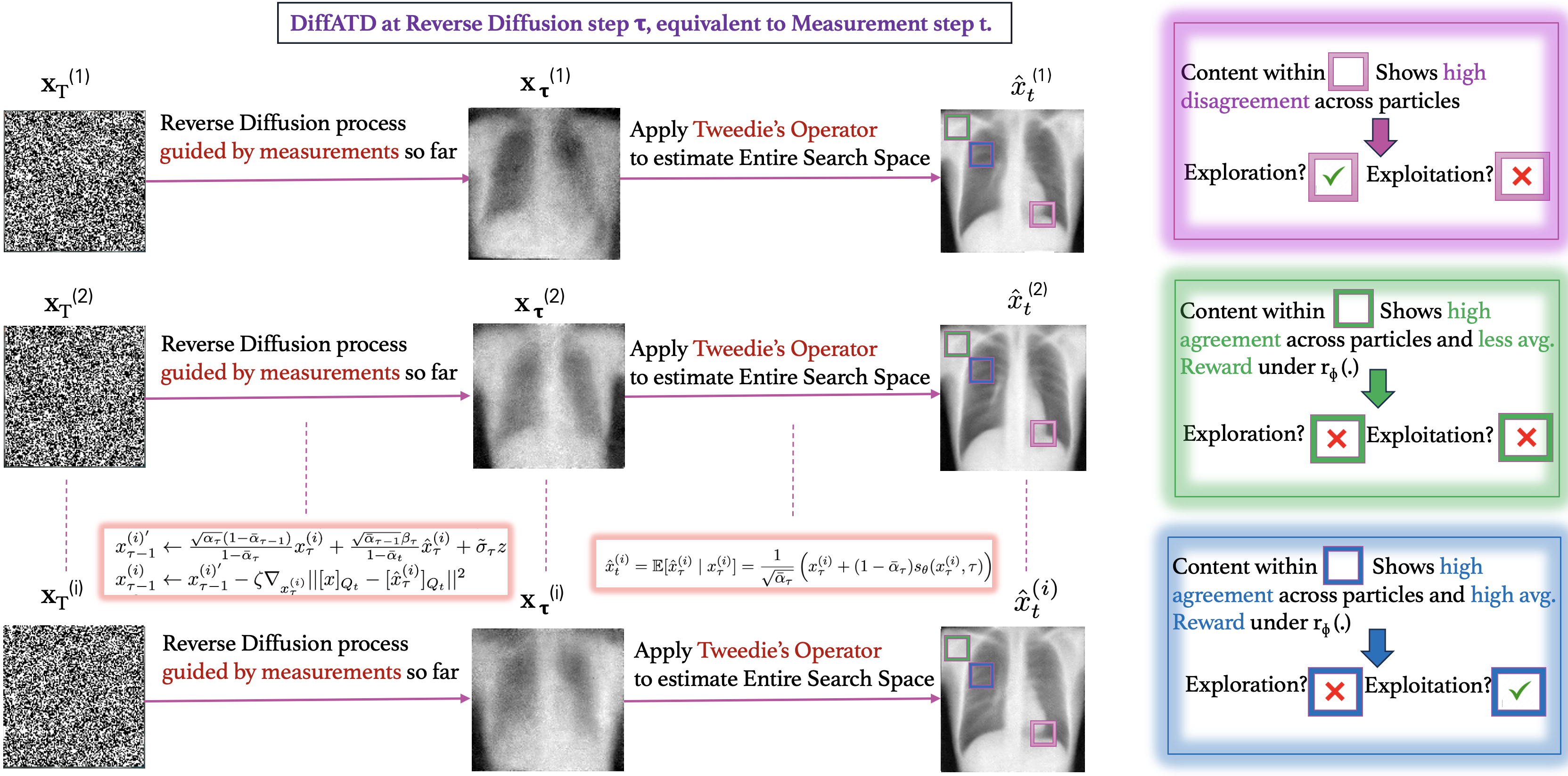
| Sep 18, 2025 | Our paper Online Feedback Efficient Active Target Discovery in Partially Observable Environments is accepted by NeurIPS 2025 🚀 |
| Mar 04, 2025 | Our paper FGI: Fast GNN Inference on Multi-Core Systems is accepted by Workshop on Graphs, Architectures, Programming, and Learning, IPDPS 2025 🚀 |